

Operational resilience
is now a board-level mandate.
The Pacific Resilience Institute exists to be the regional authority on operational resilience. This page is the practitioner's map of the APAC environment — every major jurisdiction, the binding regulator and instrument in each, the in-force dates, the designated sectors and the reporting clocks. Updated by the Institute as the landscape moves.
Informational only. This page summarises public regulatory expectations across financial services and critical infrastructure sectors to help practitioners orient themselves. It does not constitute legal or compliance advice and PRI is not endorsed by APRA, MAS, HKMA, CSA, ASD, the Department of Home Affairs, RBI, JFSA or any other authority referenced. Always consult the primary source and your own counsel.

Every APAC jurisdiction now has an operational-resilience or cyber-resilience regime.
The financial-services regimes get most of the airtime, but the binding obligations on critical infrastructure, technology and data have moved just as fast. The map below sets out who regulates what, the instrument they regulate under, when it bites and how fast a firm has to report when something breaks. Six core jurisdictions get full detail; the rest of the region gets a calibrated summary so the picture is complete.
Australia
Regional tilt — Most prescriptive operational-resilience regime in the region for finance and CI in parallel.
Replaces CPS 231/232/233. Boards accountable. Critical operations, tolerance levels, end-to-end material service-provider mapping including fourth parties. CPS 234 (Information Security) sits alongside.
All-hazards Risk Management Program covering cyber, personnel, physical and supply-chain hazards. ASD Essential Eight referenced as cyber baseline. Government powers of intervention for serious cyber incidents.
Reform tranche 1 (2024) added statutory tort and children's privacy code work.
SOCI covers 11 sectors: energy, communications, data storage/processing, financial services & markets, food & grocery, health care & medical, higher education & research, space technology, transport, water & sewerage, and defence industry.
- 72 hoursMaterial operational risk incident → APRA (CPS 230)
- 12 hoursCritical-impact cyber incident → ASD/ACSC (SOCI)
- 72 hoursOther reportable cyber incident → ASD/ACSC (SOCI)
- 72 hoursEligible data breach → OAIC (Privacy Act NDB scheme)
Instruments, effective dates and reporting windows summarised from publicly available regulator guidance current to May 2026. This page is informational only — always consult the primary source and your own counsel. Material changes are pushed to PRI members via the registrar's quarterly landscape note.
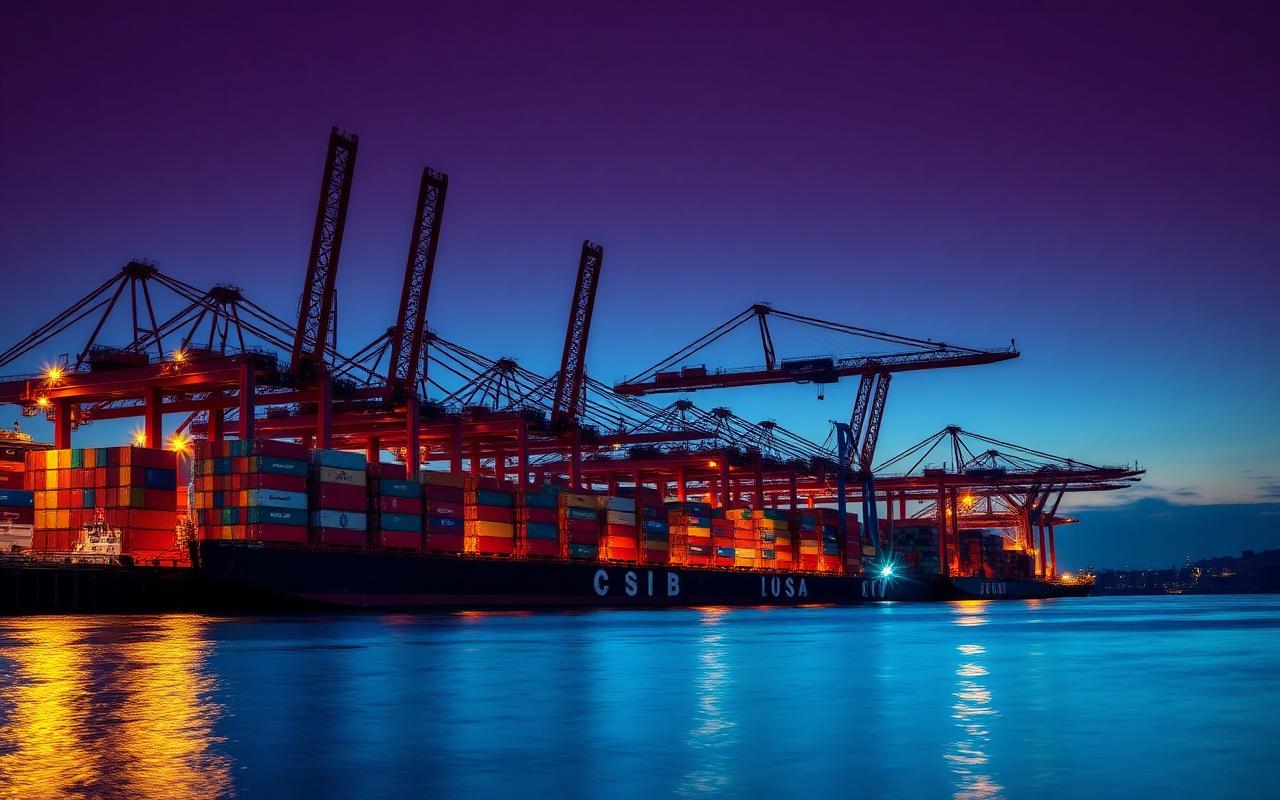
The region's risk profile is not symmetric to the West.
Western frameworks tend to treat resilience risk as abstractly distributed. An APAC-focused lens surfaces vulnerabilities that disrupt operations in distinct — and often physical — ways.
Geopolitical & supply-chain chokepoints
Maritime corridors like Malacca and the Taiwan Strait, shifting trade controls and dual-use technology restrictions translate a single regional event into knock-on failures across manufacturing, payments and logistics. Resilience here is rarely contained to one application.
Physical & climate infrastructure
The Pacific Rim carries some of the world's heaviest exposure to typhoons, earthquakes and climate-induced infrastructure stress. APAC practitioners must bind digital DR and physical asset protection far more tightly than peers in EMEA or North America.
Global Capability Centre concentration
Hubs across India, the Philippines and Malaysia carry the operations, compliance and engineering load for thousands of global firms. A localised outage or geopolitical move in these corridors can blind a multinational's worldwide operations within hours.
Between regulatory intent and organisational readiness sits a wide gap.
What examiners and supervisors are finding on the ground rarely matches what's described in policy documents. This is where the profession either matures — or gets caught.
The paper-compliance trap
Many firms repackage legacy BCM artefacts into static spreadsheets to claim alignment. Few have moved to living, automated models that genuinely map interdependencies across people, processes, technology and third parties.
The talent & capability squeeze
Operational resilience is a young discipline. Practitioners are routinely pulled from IT DR, corporate security or audit and asked to architect enterprise frameworks without region-specific training — and without peers to calibrate against.
A multi-speed ecosystem
Tier-one banks and critical infrastructure are investing heavily to meet supervisory deadlines. The mid-market and non-regulated corporate sector remain materially exposed, treating resilience as cost rather than competitive advantage.
Why APAC cannot be solved with a North American or European template.
Beyond regulators and macro risk, four operational realities make this region structurally distinct. Each one breaks a default assumption baked into most global resilience frameworks.
The multi-jurisdictional fragmentation trap
There is no DORA equivalent in APAC. A regional firm — bank, hospital network, energy operator or logistics provider — navigates a web of distinct mandates simultaneously.
- AustraliaAPRA CPS 230 for regulated financial entities; SOCI Act + CIRMP for 11 critical infrastructure sectors; ASD Essential Eight as a baseline reference.
- SingaporeMAS BCM and TRM for financial institutions; Cybersecurity Act + CCoP 2.0 for designated CII across 11 sectors.
- Hong KongHKMA OR-2 for banks; Protection of Critical Infrastructures (Computer Systems) Ordinance for 8 essential-service sectors.
- Japan · India · ASEANJapan's Economic Security Promotion Act and FSA guidance; India's RBI / SEBI / IRDAI rules and DPDP Act + CERT-In directions; Malaysia BNM RMiT and the National Cyber Security Act 2024; Philippines BSP and DICT NCSP.
A single rigid template will not satisfy any of them. The discipline is to map dependencies once and translate compliance outputs jurisdiction by jurisdiction, and sector by sector.
Global Capability Centre vulnerability
APAC is the operational back-office for the global economy — a concentration risk most head offices still under-see.
- Who hosts whatTechnology, compliance, back-office and customer service for thousands of multinationals sit in GCC corridors across India, the Philippines and Southeast Asia.
- Why it mattersA localised power, network or climate event in these corridors creates an instant systemic blind spot for operations in New York, London and Tokyo.
- What's requiredGroup resilience must extend visibility into the offshore engine rooms — not stop at the corporate headquarters.
If the GCC isn't in the impact-tolerance test, the test is fiction.
High-frequency physical + digital volatility
Digital DR and physical asset protection cannot live as separate disciplines in the Pacific Rim — whether the asset is a payment switch, a hospital EMR, a port management system or a grid SCADA platform.
- Physical exposureTyphoons, earthquakes, severe weather and infrastructure stress. Backup data centres must be genuinely isolated — not sharing local utility networks or subsea cable landing stations.
- Digital velocityAPAC leads global adoption of 24/7 instant payment networks, real-time clinical and logistics platforms, and always-on industrial control systems. Failures propagate in seconds.
- The new barA minor IT glitch or a coordinated social-media surge can trigger a digital bank run, a hospital diversion event, or a port shutdown in under an hour. Supervisors now test whether firms can generate actionable operational, safety and liquidity data inside 60 minutes.
The two domains have collapsed into one — the credential and the operating model must reflect that.
Third-party friction and the nth-party reality
Mapping past primary vendors to fourth- and nth-party exposure is where most programmes break.
- The hidden single point of failureDifferent software vendors frequently rely on the exact same regional cloud hubs in Singapore or Sydney — concentration risk hidden behind a diverse-looking supplier list.
- Regulatory pushAPRA CPS 230 material service provider expectations, Singapore's CCoP 2.0 supply-chain controls and Australia's CIRMP supply-chain hazard requirements all converge on the same point: the responsible entity owns its vendors' resilience.
- What suppliers must now provideDetailed dependency maps, clear incident escalation paths, and demonstrable recovery evidence — as a standard cost of doing business in the region.
The supplier conversation is no longer about contracts. It is about evidence.
A standard built for this environment — not translated into it.
The Pacific Resilience Institute exists because a generic continuity playbook fails in this region. Our credentials connect regulatory compliance with the geographical, geopolitical and physical realities of the Pacific Rim — and give the region's practitioners a peer-recognised standard to be measured against.